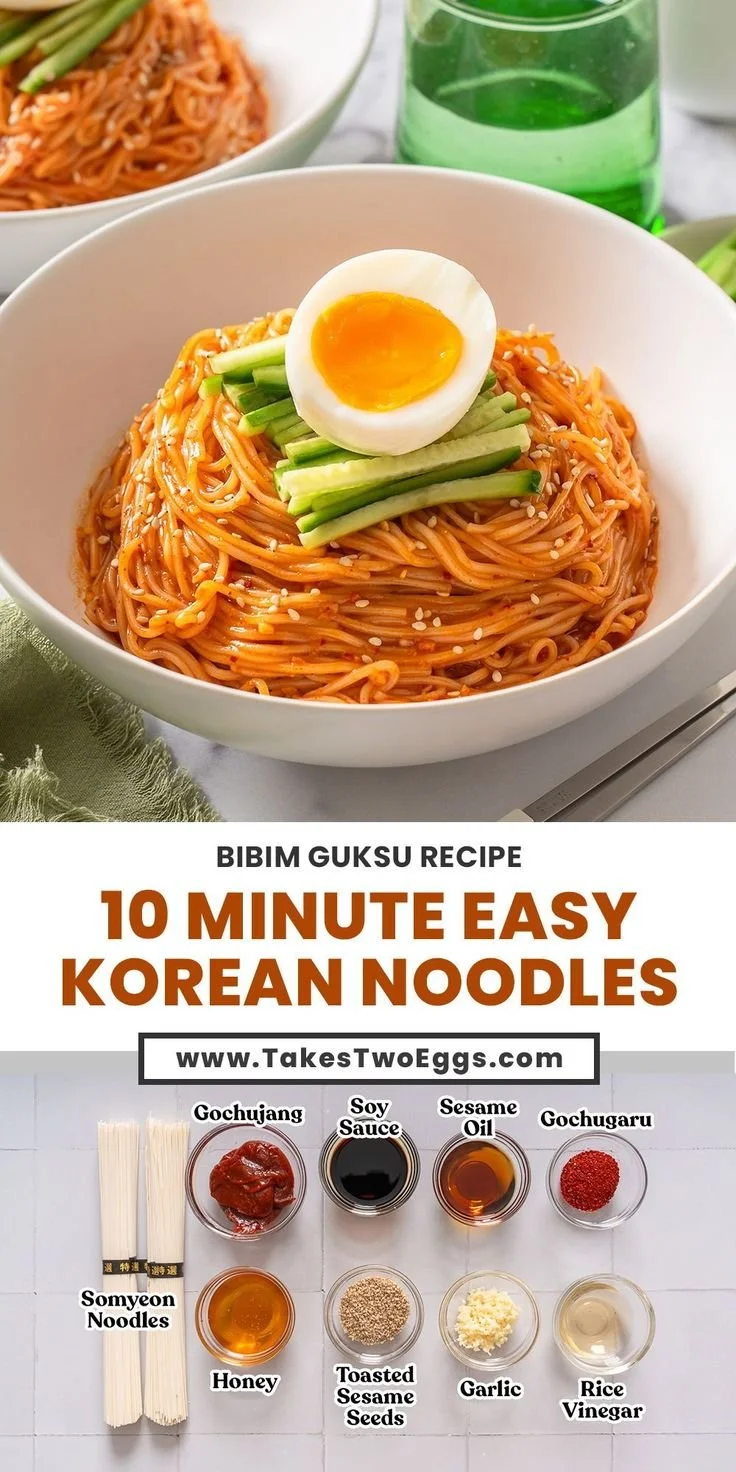
Bibim Guksu, or Korean Spicy Cold Noodles, is a refreshing dish perfect for warm days or when you’re craving something quick and flavorful. This recipe delivers satisfying noodle goodness with a spicy kick, and it’s incredibly easy to prepare. With a light sauce and fresh toppings, it’s a versatile option for any meal.
Why You’ll Love Bibim Guksu
- Quick to Prepare: Bibim Guksu can be ready in under 30 minutes, making it a perfect weeknight meal or a last-minute lunch option.
- Customizable Flavors: You can adjust the spice level and toppings according to your taste, allowing for endless variations.
- Light yet Satisfying: This dish is refreshing and healthy, perfect for hot weather while still filling enough to satisfy your hunger.
- Packed with Fresh Ingredients: Fresh cucumbers and soft-boiled eggs add texture and nutrition, enhancing the meal’s overall appeal.
- Great for Meal Prep: Prepare the components in advance for a quick assembly during the week, making it a fantastic option for busy lifestyles.
Recipe Overview
- Prep Time: 10 minutes
- Cook Time: 5 minutes
- Total Time: 15 minutes
- Servings: 2
- Difficulty Level: Easy
Ingredients You’ll Need for Bibim Guksu
- Cold Noodles: 4 ounces (any thin wheat noodles work well, like somen or udon)
- Gochujang Sauce:
- 2 tablespoons gochujang (Korean red chili paste)
- 1 tablespoon sesame oil
- 1 tablespoon sugar
- 1 tablespoon soy sauce
- 1 tablespoon rice vinegar
- 1 clove garlic, minced
- Toppings:
- 1 small fresh cucumber, julienned
- 1 soft-boiled egg, halved
- 1 tablespoon sesame seeds (for garnish)
These ingredients come together beautifully for an authentic taste. You can swap the cold noodles for zucchini noodles for a low-carb option or use other vegetables like carrots for additional freshness.

here
How to Make Bibim Guksu
1. Cook the Noodles
Cook the cold noodles according to package instructions. Usually, this takes about 5 minutes. Once tender, drain them and rinse under cold water to stop the cooking process and cool them down.
2. Prepare the Sauce
In a mixing bowl, combine the gochujang, sesame oil, sugar, soy sauce, rice vinegar, and minced garlic. Whisk until smooth to ensure all ingredients are well incorporated.
3. Toss the Noodles
Once your noodles are cool, transfer them to a large bowl and pour the sauce over them. Toss gently until the noodles are well coated with the sauce, which should have a vibrant red color.
4. Garnish and Serve
Divide the noodles into bowls and top each serving with the julienned cucumber, halved soft-boiled egg, and a sprinkle of sesame seeds. Serve immediately for the best texture and flavor.
Tips for Success
- Rinse the Noodles: Rinsing the noodles not only cools them but also washes away excess starch, preventing them from becoming gummy.
- Adjust Spice Levels: If you prefer a milder flavor, start with less gochujang and gradually increase it to your liking.
- Perfect Soft-Boiled Eggs: For a soft-boiled egg, simmer for about 6–7 minutes, then plunge into ice water immediately to stop cooking.
- Fresh Ingredients Matter: Use fresh cucumbers for crunch. You can also opt for other fresh veggies like radishes for added texture.
- Mix Thoroughly: Ensure that you toss the noodles until the sauce is evenly distributed for the best flavor.
Easy Variations
- Protein Addition: Add cooked chicken, shrimp, or tofu for an extra protein boost.
- Spicy Twist: Incorporate some sliced jalapeños or a pinch of red pepper flakes for added heat.
- Vegetable Medley: Top with sliced bell peppers, carrots, or any seasonal veggies you like for more nutrients.
- Sesame Flavor: Incorporate toasted sesame seeds into the sauce for an added nutty flavor.
- Herbal Accents: Garnish with fresh herbs like cilantro or green onions to enhance flavor.
What to Serve with Bibim Guksu
- Kimchi: The tangy, fermented flavors of kimchi pair wonderfully with the spicy noodles, adding a great balance.
- Korean Fried Chicken: Crispy and juicy fried chicken complements the coolness of the noodles beautifully.
- Japchae: This Korean stir-fried glass noodle dish makes for a delightful contrast in texture and taste.
- Rice: A small bowl of steamed rice can balance out the spice for those who prefer milder flavors.
- Steamed Vegetables: A side of sautéed or steamed vegetables adds nutrition and freshness to the meal.
Storage and Reheating
- In the Refrigerator: Store leftover noodles in an airtight container for up to 3 days. It’s best to keep the sauce separate until you’re ready to eat.
- Freezing: Cold noodles can be frozen, but note that the texture may change upon thawing. Freeze only if necessary.
- Reheating: Enjoy the dish cold, but if you prefer warmed noodles, gently heat them in a microwave for about 30 seconds, being careful not to overcook.
- Meal Prep Note: Prepare the noodles and sauce in advance; just combine and add toppings when ready to serve.
Common Mistakes to Avoid
- Overcooking the Noodles: Follow the package instructions carefully to avoid mushy noodles.
- Ignoring the Rinse Step: Skipping rinsing can result in sticky noodles due to excess starch.
- Inadequate Sauce Mixing: Ensure the sauce is well mixed before tossing; uneven flavor can make for a less enjoyable dish.
- Neglecting Fresh Ingredients: Stick to fresh vegetables; wilted components can ruin the dish’s overall appeal.
Bibim Guksu: Background & Cultural Inspiration
Bibim Guksu has its roots in Korean cuisine and is especially popular during the summer months. It’s often enjoyed cold, making it suitable for hot weather and outdoor picnics. The blend of gochujang represents the bold flavors of Korean cooking, adding a spicy and savory punch that many appreciate. The dish can be seen as a quick meal solution, reflecting the values of convenience and flavor in Korean culinary culture.
Frequently Asked Questions
Can I make Bibim Guksu in advance?
Yes, you can prepare the noodles and sauce ahead of time. Just store them separately in the refrigerator and assemble when ready to eat.
How spicy is Bibim Guksu?
The spice level can vary based on the amount of gochujang you use. Start small if you’re unsure, and adjust to your taste.
Can I use a different type of noodle?
Absolutely! While traditional wheat noodles are common, you can use rice noodles or zucchini noodles for a gluten-free option.
How long can I store leftovers?
Leftover Bibim Guksu can be kept in the refrigerator for up to 3 days.
What if I can’t find gochujang?
If gochujang is unavailable, you can use a mixture of miso paste with a bit of red pepper flakes to create a similar flavor profile.
Final Thoughts
Bibim Guksu offers a delightful combination of textures and flavors that everyone can appreciate. Its ease of preparation and freshness make it an excellent choice for any meal. Whether you need a quick lunch or a light dinner, this recipe is worth trying. Enjoy customizing it to your taste and savor the deliciousness of this Korean classic!
PrintBibim Guksu (Korean Spicy Cold Noodles)

A refreshing Korean dish featuring cold noodles tossed in a spicy gochujang sauce, topped with fresh vegetables and soft-boiled eggs.
- Prep Time: 10 minutes
- Cook Time: 5 minutes
- Total Time: 15 minutes
- Yield: 2 servings
- Category: Main Course
- Method: Cold Preparation
- Cuisine: Korean
- Diet: Vegetarian
Ingredients
- 4 ounces cold noodles (somen or udon)
- 2 tablespoons gochujang (Korean red chili paste)
- 1 tablespoon sesame oil
- 1 tablespoon sugar
- 1 tablespoon soy sauce
- 1 tablespoon rice vinegar
- 1 clove garlic, minced
- 1 small fresh cucumber, julienned
- 1 soft-boiled egg, halved
- 1 tablespoon sesame seeds (for garnish)
Instructions
- Cook the cold noodles according to package instructions, about 5 minutes. Once tender, drain and rinse under cold water.
- Prepare the sauce by combining gochujang, sesame oil, sugar, soy sauce, rice vinegar, and minced garlic in a bowl and whisk until smooth.
- Toss the cooled noodles with the sauce in a large bowl until well coated.
- Garnish the noodles with julienned cucumber, halved soft-boiled egg, and sesame seeds. Serve immediately.
Notes
Rinse the noodles to prevent gummy texture. Adjust spice by modifying the amount of gochujang used.